
When we think of countries, we usually imagine them neatly placed within a single continent — like France in Europe or Japan in Asia. But geography isn’t always that simple. Some countries stretch across multiple continents, blending cultures, histories, and landscapes from two (or even three) regions of the world. These are known as transcontinental countries.
In this post, we’ll explore what makes a country transcontinental, which nations hold that unique status, and why they’re important both geographically and culturally.
What Is a Transcontinental Country?
A transcontinental country is a nation that occupies territory in more than one continent. This can happen for several reasons:
Geographical borders: Natural features like mountains or rivers that divide continents.
Political boundaries: Territories or islands owned by a country located far away from its mainland.
Cultural or historical influence: Some countries are associated with more than one continent due to shared history and heritage.
These nations often serve as bridges between regions — connecting different economies, languages, and civilizations.
List of Countries Spanning More Than One Continent
Let’s take a closer look at some of the most interesting countries that lie across continents.
1. Russia – Europe and Asia

Russia is the largest country in the world, and it spans two continents: Europe and Asia. The Ural Mountains serve as the dividing line between these two regions.
About 77% of Russia’s landmass lies in Asia, but most of its population lives in the European part, including major cities like Moscow and Saint Petersburg.
This gives Russia a unique identity — politically European, yet geographically Asian.
Russia’s vast expanse makes it a cultural mosaic that blends Slavic, Turkic, and Siberian influences.
2. Turkey – Europe and Asia
Turkey is another classic example of a transcontinental nation. The country’s European part (Thrace) is separated from its Asian part (Anatolia) by the Bosphorus Strait, Sea of Marmara, and Dardanelles Strait.
The iconic city of Istanbul actually sits on both sides — one foot in Europe, one in Asia.
This geographical split has shaped Turkey’s rich culture, which combines European and Middle Eastern traditions.
Turkey’s location has made it a crossroads of civilizations for thousands of years, from the Byzantine Empire to the Ottoman Empire.
3. Egypt – Africa and Asia
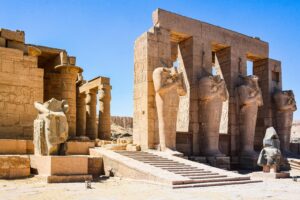
Egypt is primarily located in North Africa, but its Sinai Peninsula extends into Asia.
The Suez Canal marks the boundary between the two continents.
This makes Egypt not only a key part of Africa but also a strategic link to the Middle East and Asia.
Culturally, Egypt’s transcontinental position has played a crucial role in trade, migration, and global politics.
4. Kazakhstan – Europe and Asia
Kazakhstan, the world’s largest landlocked country, straddles Europe and Asia as well.
The Ural River acts as the continental boundary.
Most of Kazakhstan lies in Central Asia, but a small portion extends into Europe.
Its diverse culture reflects a blend of Russian, Turkic, and Central Asian influences, symbolizing the meeting point between East and West.
5. Azerbaijan and Georgia – Europe and Asia

Both Azerbaijan and Georgia are situated in the Caucasus region, which lies between Europe and Asia.
The Greater Caucasus Mountains form the continental boundary.
Culturally, these countries have both European and Asian characteristics, visible in their architecture, food, and traditions.
Their position has historically made them important trade and cultural hubs along the ancient Silk Road.
6. Indonesia – Asia and Oceania
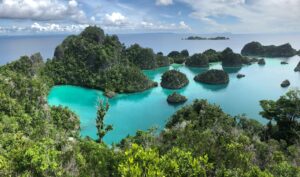
Indonesia is made up of more than 17,000 islands, and some of them — like Papua — extend into Oceania.
The island of New Guinea is split between Indonesia (western half) and Papua New Guinea (eastern half).
This makes Indonesia both an Asian and Oceanian country.
Its vast archipelago represents an incredible mix of cultures, languages, and ecosystems — truly bridging two worlds.
7. France – Europe, South America, and Oceania

At first glance, France might seem purely European, but it’s actually present on multiple continents thanks to its overseas territories.
French Guiana is in South America.
Islands like Réunion (in Africa) and New Caledonia (in Oceania) extend France’s reach across the globe.
This gives France one of the most geographically diverse territories in the world.
8. Spain – Europe and Africa

Spain’s mainland is in Europe, but it also controls territories in Africa, such as Ceuta and Melilla on the northern coast of Morocco, and the Canary Islands off the African coast.
These regions make Spain a transcontinental nation bridging Europe and Africa.
Why Transcontinental Countries Matter
Transcontinental nations are more than just geographic oddities — they play vital roles in global politics, trade, and culture.
Strategic importance: They often control key waterways, trade routes, or border regions.
Cultural diversity: Their populations are a mix of traditions, languages, and religions.
Economic advantage: They can access multiple markets and act as gateways between continents.
From Russia’s energy exports to Turkey’s cultural diplomacy, these countries often serve as bridges between worlds.
Final Thoughts
Transcontinental countries remind us that geography is not just about maps — it’s about connection. These nations link people, economies, and cultures from different parts of the world, proving that boundaries are often more fluid than they seem.
From the snowy expanses of Russia to the tropical islands of Indonesia, each transcontinental nation tells a story of unity in diversity.